Spicy Drunken Noodles Recipe-Quick & Flavorful Pad Kee Mao
Drunken noodles, or Pad Kee Mao as it’s known in Thailand, are a true explosion of flavor that I can’t get enough of. There’s something incredibly satisfying about this dish that has captured the hearts (and taste buds) of so many. What makes drunken noodles so beloved? It’s that perfect harmony of savory, spicy, and slightly sweet notes, all clingin extractg to wonderfully chewy wide rice noodles. The dish gets its name from the legend that it’s the perfect fuel after a night out – or maybe it’s just so good it makes you feel a little tipsy with delight! The magic of drunken noodles lies in its bold ingredients: a fiery chili paste, fragrant holy basil, tender proteins, and crisp vegetables, all stir-fried together in a symphony of deliciousness. Today, I’m going to show you how to recreate this irresistible classic in your own kitchen, so get ready to experience the addictive allure of authentic drunken noodles!
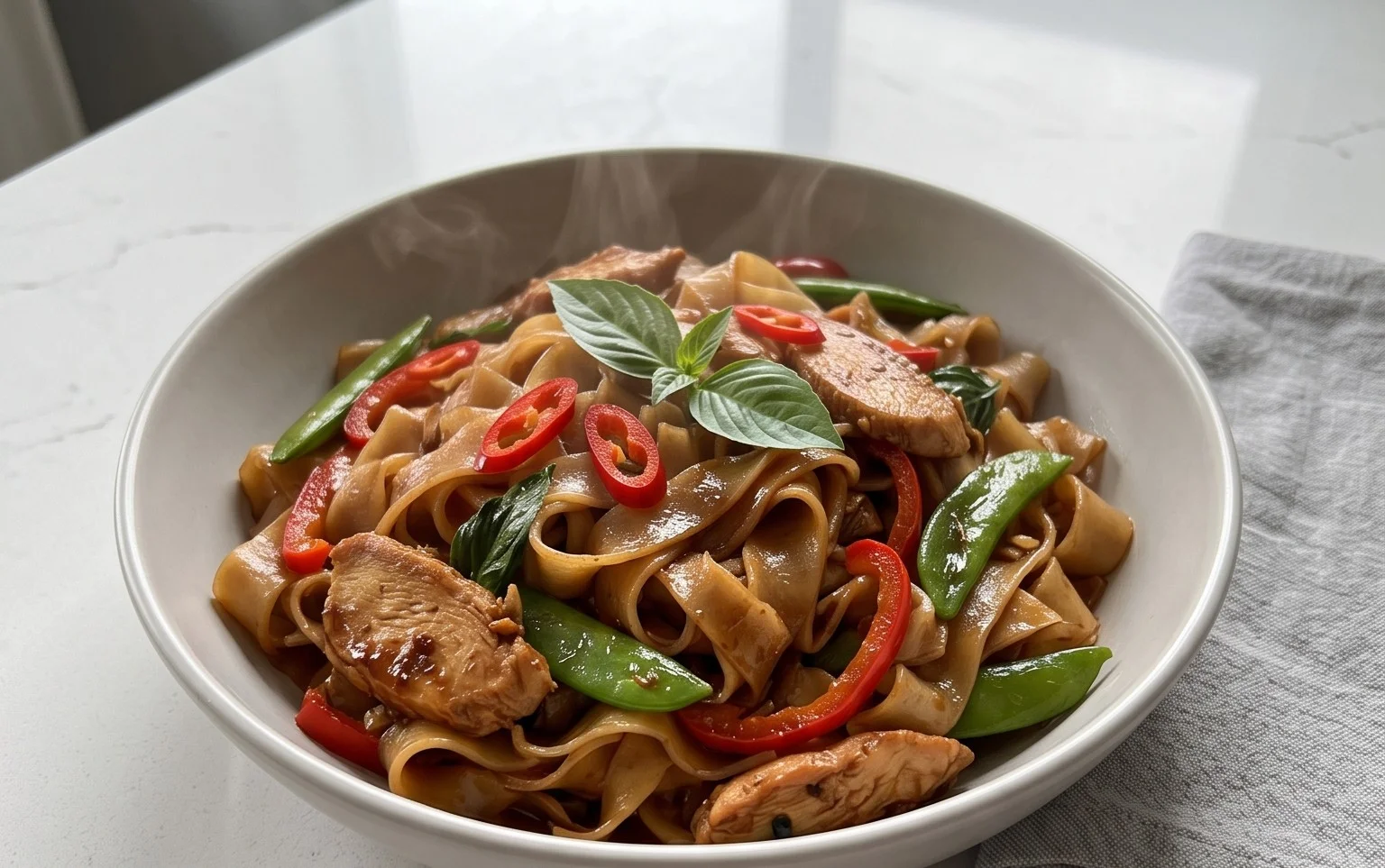
Drunken Noodles (Pad Kee Mao)
Drunken Noodles, or Pad Kee Mao, is a vibrant and intensely flavorful Thai stir-fry that’s as satisfying to make as it is to eat. The name “Drunken Noodles” supposedly comes from its popularity as a late-night, post-drinking meal, its bold flavors perfectly complementing a good buzz. This dish is a delightful explosion of savory, spicy, and slightly sweet notes, with a wonderful textural contrast between the tender noodles, succulent chicken, and crisp vegetables. Don’t let the spice level scare you off – you can easily adjust the amount of chili to your preference. Let’s get cooking!
Ingredients:
Preparation Steps
First things first, let’s get our ingredients prepped and ready. This is crucial for any stir-fry, as everything cooks very quickly once it hits the hot wok or pan.
Noodle Preparation
Start by preparing your rice noodles. If you’re using dried wide rice noodles, you’ll typically need to soak them in hot water until they are pliable but still have a slight chew, a stage known as “al dente.” Follow the package instructions carefully, as soaking times can vary. Over-soaking will result in mushy noodles, which is something we want to avoid. Aim for noodles that are flexible enough to stir-fry without breaking. Once they reach the desired texture, drain them thoroughly and toss them with a tiny bit of oil to prevent sticking. If you can find fresh wide rice noodles, you can usually use them directly without soaking, or with a very brief dip in hot water.
Chicken and Marinade
Next, prepare your chicken. Trim any excess fat from the chicken thighs or breast and slice them thinly against the grain. This ensures that the chicken stays tender and doesn’t become tough during the cooking process. In a small bowl, combine the thinly sliced chicken with 1 teaspoon of soy sauce. Let this marinate for at least 10 minutes while you prepare the rest of your ingredients. The soy sauce will add a subtle layer of flavor and help to tenderize the chicken.
Sauce Assembly
In a separate small bowl, whisk together all the ingredients for your sauce: 3 teaspoons of soy sauce, 1.5 teaspoons of dark soy sauce, 2 teaspoons of oyster sauce, 1 tablespoon + 1 teaspoon of fish sauce, and 2 teaspoons of brown sugar. The dark soy sauce is important for that characteristic deep, appetizing color of Pad Kee Mao, while the fish sauce provides essential salty umami. The brown sugar balances the saltiness and spice. Taste the sauce and adjust the sweetness or saltiness if you prefer.
Vegetable and Aromatics Prep
Now, let’s get our vegetables and aromatics ready. Slice the onion thinly. Finely chop the Thai red chili peppers – remember, these are potent, so start with fewer if you’re sensitive to heat and you can always add more later or serve with extra chilies on the side. Cut the baby bok choy into bite-sized pieces, separating the thicker stems from the more delicate leaves, as they will cook at slightly different rates. Roughly chop the Holy basil leaves. Separate the white and green parts of the green onion and chop them.
Cooking the Drunken Noodles
With all your ingredients prepped and organized, it’s time for the main event – the stir-frying! This process is rapid, so have everything within easy reach.
1. Heat your wok or a large, heavy-bottomed skillet over high heat until it’s smoking hot. Add 1 tablespoon of vegetable oil and swirl to coat the pan. Once the oil is shimmering, add the marinated chicken in a single layer. Stir-fry the chicken for 2-3 minutes, until it’s mostly cooked through and lightly browned. Remove the chicken from the wok and set it aside. This step ensures the chicken is cooked perfectly and doesn’t get overcooked while the vegetables are being stir-fried.
2. Add another tablespoon of oil to the hot wok. Add the minced garlic, sliced onion, and chopped Thai red chili peppers. Stir-fry for about 30 seconds until fragrant, being careful not to burn the garlic. The heat of the wok will release their aromas beautifully. You should smell the pungent chili and garlic immediately – this is where the signature aroma of the dish begin extracts.
3. Add the separated bok choy stems to the wok and stir-fry for about 1 minute until they start to soften slightly. Then, add the bok choy leaves and stir-fry for another 30 seconds until they are just wilted. It’s important not to overcook the bok choy; we want it to retain a bit of its crispness.
4. Return the cooked chicken to the wok. Add the prepared noodles and pour the assembled sauce over everything. Toss gently but thoroughly with tongs to coat all the ingredients evenly with the sauce. Continue to stir-fry for 2-3 minutes, allowing the noodles to absorb the flavors and soften further, and for the sauce to thicken slightly. This is where the magic happens as the noodles soak up all those delicious saucy notes.
5. Finally, add the Holy basil leaves and the chopped white parts of the green onion. Toss for another 30 seconds until the basil is just wilted and fragrant. The basil is added at the very end to preserve its fresh, aromatic qualities. Stir in the chopped green parts of the green onion for a final burst of freshness and color. Serve immediately.
Enjoy your homemade Drunken Noodles! The combination of chewy noodles, tender chicken, and the punchy, aromatic sauce is truly irresistible.
Conclusion:
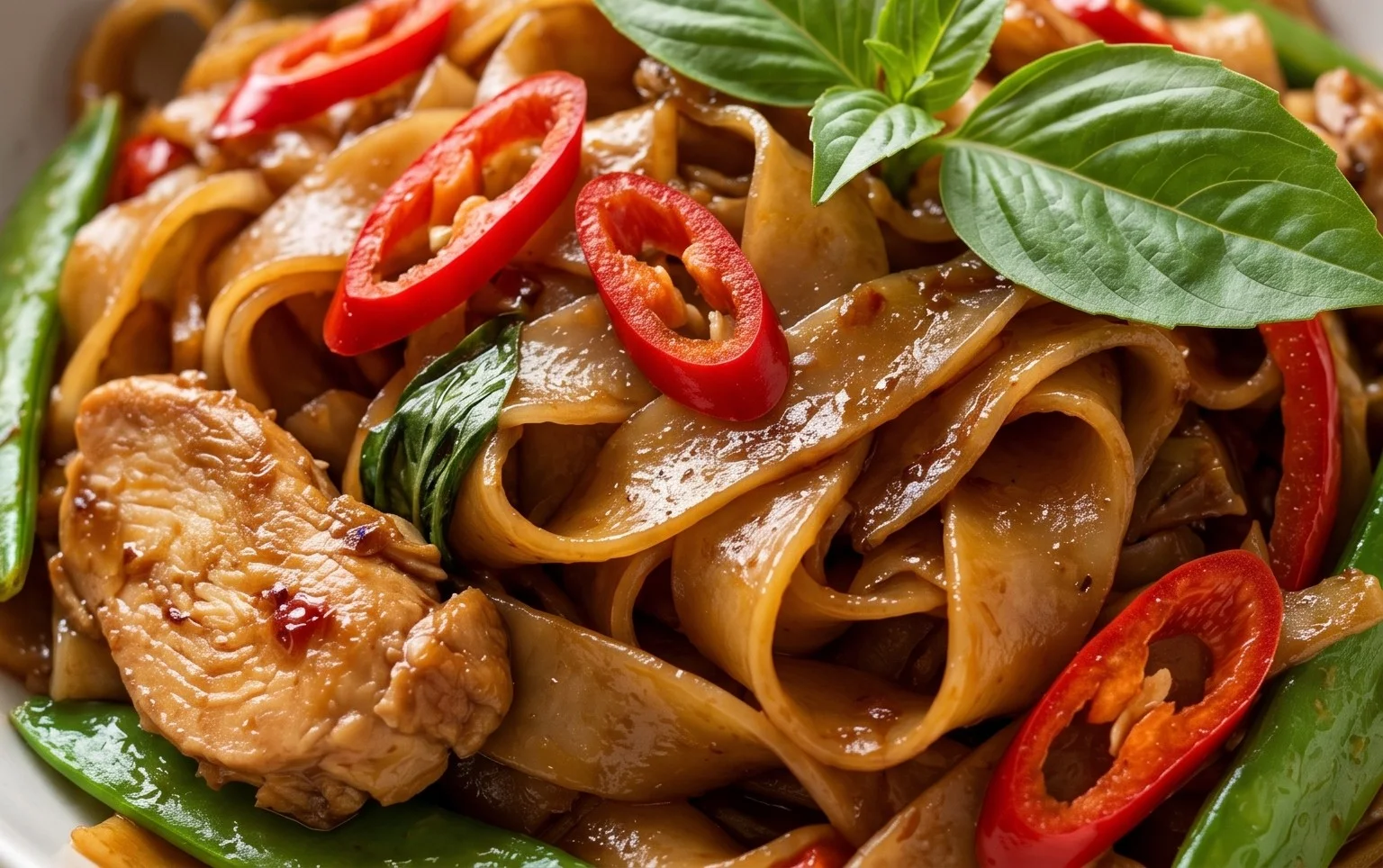
So there you have it – your guide to creating incredible Drunken Noodles right in your own kitchen! This recipe truly shines because it’s a symphony of bold flavors and satisfying textures. The combination of savory, spicy, and slightly sweet notes, all brought together by the chewy rice noodles, makes this dish an absolute winner for any weeknight meal or impressive dinner party. I truly believe this is a recipe you’ll want to make again and again.
For serving, I love to garnish my Drunken Noodles with fresh cilantro, a squeeze of lime, and a sprinkle of crushed peanuts for extra crunch. They are also fantastic alongside a crisp green salad or some simple steamed vegetables. Don’t be afraid to experiment with variations either! Swap out the protein for shrimp, tofu, or even extra vegetables like bell peppers and broccoli. You can adjust the spice level by adding more or less chili, or even using a different type of chili for a nuanced heat.
I really encourage you to give this Drunken Noodles recipe a try. It’s surprisingly straightforward, incredibly rewarding, and a fantastic way to explore the vibrant world of Thai cuisine. Enjoy the delicious journey!
Frequently Asked Questions about Drunken Noodles:
Can I make Drunken Noodles vegetarian or vegan?
Absolutely! To make this recipe vegetarian or vegan, simply omit the meat and use firm or extra-firm tofu. Ensure your oyster sauce is vegetarian (many brands offer a vegan alternative using mushrooms) and substitute any fish sauce with a vegan fish sauce or a little extra soy sauce. The rest of the ingredients are typically vegan-friendly.
What kind of noodles are best for Drunken Noodles?
Traditionally, wide, flat rice noodles (often labeled “sen yai” in Asian markets) are used for Drunken Noodles. Their chewy texture holds up beautifully to the sauce and stir-frying. If you can’t find them, you can substitute with medium-width rice noodles or even fettuccine pasta in a pinch, though the texture will be slightly different.
How can I make my Drunken Noodles less spicy?
If you prefer a milder dish, start with less chili. You can use just one small dried chili or even omit them and use a pinch of red pepper flakes to control the heat. When adding the chili, consider removing the seeds and membranes, as this is where most of the heat resides. You can always add more spice at the end if needed!
Drunken Noodles (Pad Kee Mao)
Spicy and flavorful Thai stir-fried noodles with tender chicken, fresh vegetables, and aromatic basil. This version uses chicken instead of pork and omits alcohol for a non-alcoholic preparation.
Ingredients
-
250 grams medium wide rice noodles (dried)
-
250 grams chicken thighs or chicken breast
-
3 tablespoons vegetable or canola oil (divided)
-
1 tablespoon minced garlic
-
1/2 onion (sliced)
-
2-3 Thai red chili peppers
-
4-5 Baby bok choy
-
1 cup Holy basil
-
1 Green Onion (White and green parts separate)
-
3 teaspoons soy sauce
-
1.5 teaspoon dark soy sauce
-
2 teaspoons oyster sauce
-
1 tablespoon + 1 teaspoon fish sauce
-
2 teaspoons brown sugar
Instructions
-
Step 1
Soak the dried rice noodles in hot water according to package directions until softened but still firm. Drain and set aside. -
Step 2
Slice the chicken into bite-sized pieces. Season with 1 teaspoon of soy sauce. -
Step 3
Prepare the sauce: In a small bowl, whisk together 3 teaspoons soy sauce, 1.5 teaspoon dark soy sauce, 2 teaspoons oyster sauce, 1 tablespoon + 1 teaspoon fish sauce, and 2 teaspoons brown sugar. -
Step 4
Heat 2 tablespoons of vegetable oil in a wok or large skillet over medium-high heat. Add the minced garlic and sliced Thai red chili peppers (adjust to your spice preference) and stir-fry until fragrant, about 30 seconds. -
Step 5
Add the seasoned chicken to the wok and stir-fry until it is almost cooked through. Add the sliced onion and stir-fry for another minute. -
Step 6
Add the drained rice noodles and the prepared sauce to the wok. Toss everything together until the noodles are coated and heated through. -
Step 7
Add the baby bok choy and the white parts of the green onion. Stir-fry for 1-2 minutes until the bok choy is slightly wilted. -
Step 8
Stir in the holy basil leaves and the green parts of the green onion. Cook for another 30 seconds, until the basil is wilted and fragrant. Serve immediately.
Important Information
Nutrition Facts (Per Serving)
It is important to consider this information as approximate and not to use it as definitive health advice.
Allergy Information
Please check ingredients for potential allergens and consult a health professional if in doubt.