French Macaron Recipe – Easy Perfect Macarons
French Macaron Recipe: Ah, the French macaron. Just the name conjures images of delicate, jewel-toned cookies, whispering tnon-alcoholic ales of Parisian patisseries and sophisticated sweetness. For years, I’ve been captivated by these elegant confections, their airy texture, their satisfyingly crisp shell, and the burst of luscious flavor that awaits within. Many of us are drawn to the French macaron not just for their exquisite taste, but for their sheer artistry. They are the ultimate showstopper, capable of transforming a simple afternoon tea into a lavish affair or a thoughtful gift into a treasured indulgence. The secret to a perfect French macaron lies in a precise dance of ingredients and technique, a challenge that, once mastered, unlocks a world of delightful possibilities. If you’ve ever dreamed of creating these ethereal treats in your own kitchen, then you’ve come to the right place.
French Macaron Recipe
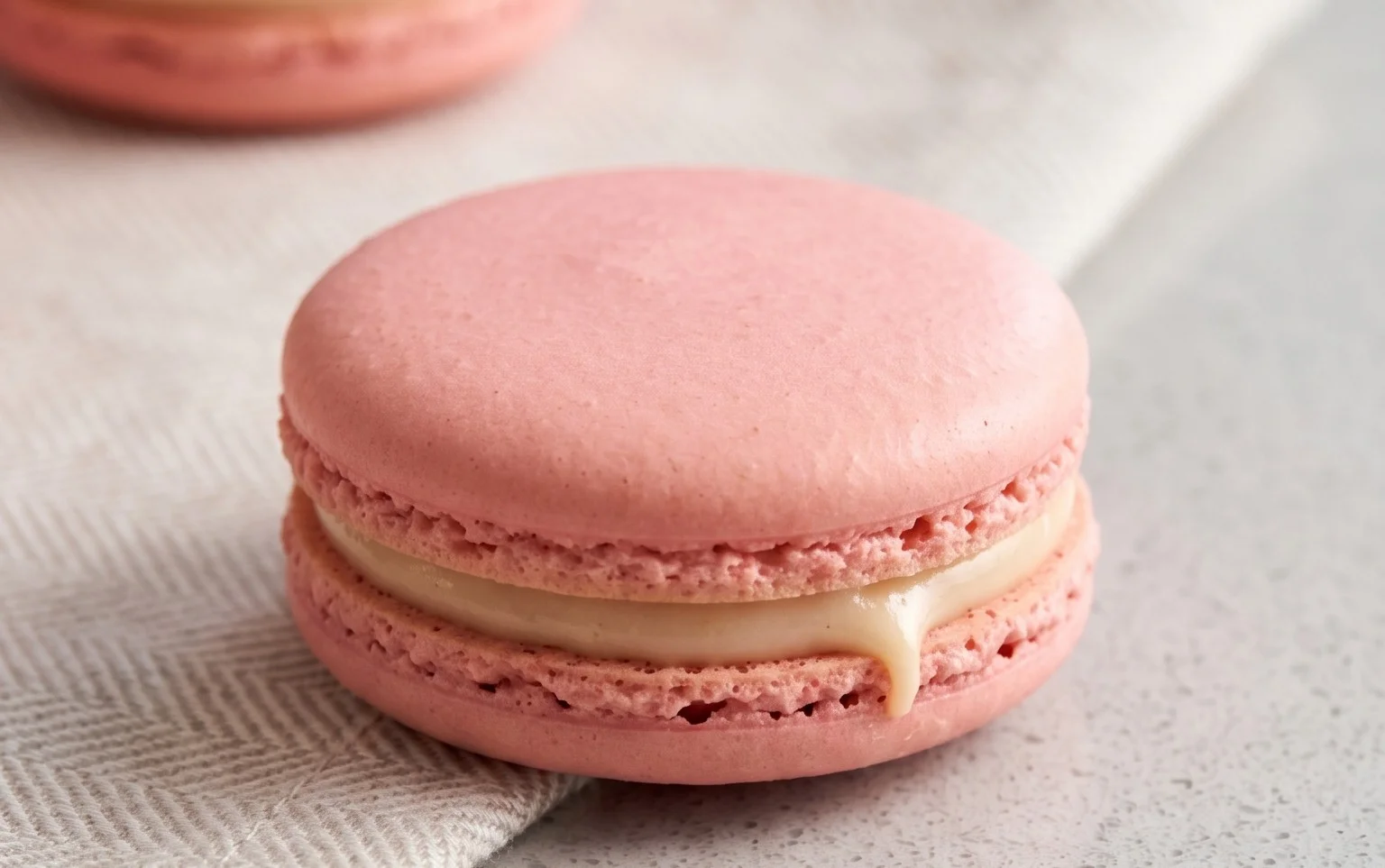
Ah, the French macaron! Those delicate, colorful, meringue-based cookies with their crisp shells and chewy interiors, sandwiched with a luscious filling. They’re the epitome of elegance in the dessert world, often intimidating to bake at home. But I’m here to tell you, with a little patience, precision, and this foolproof recipe, you too can create these little masterpieces!
The journey to perfect macarons is a rewarding one, and while they might seem daunting, breaking them down into manageable steps makes all the difference. We’ll focus on the classic French method, which involves whipping egg whites into a meringue and then folding in the dry ingredients. Let’s gather our ingredients and embark on this delicious adventure.
Ingredients:
Preparing Your Ingredients and Workspace
Before we begin extract the mixing process, it’s crucial to have everything prepped. Ensure your egg whites are at room temperature. This helps them whip up to a more stable meringue. You can leave them out on the counter for about 30 minutes to an hour. Some bakers even advocate for agin extractg their egg whites (leaving them in the fridge for a few days), but for a first attempt, room temperature is perfectly fine.
It’s also vital to sift your almond flour and powdered sugar together. This creates a super-fine, lump-free base for your macaron shells. I recommend sifting them at least twice, if not three times, through a fine-mesh sieve. This aeration is key to achieving those smooth, crack-free tops and those characteristic “feet” – the ruffled base of the macaron. The salt is also added at this stage to enhance flavor.
Step 1: Creating the Macaron Paste (Tant Pour Tant)
In a medium bowl, whisk together your sifted almond flour, powdered sugar, and salt. This mixture is often referred to as “tant pour tant,” meaning “as much as the other,” which in this case refers to the equal parts almond flour and powdered sugar by weight, a common ratio in macaron making. Set this dry mixture aside. In a separate, impeccably clean bowl (any trace of fat can prevent your egg whites from whipping properly), combine the room-temperature egg whites and the granulated sugar. You can do this in the bowl of your stand mixer, fitted with the whisk attachment, or use a hand mixer.
Step 2: Whipping the Meringue
Begin extract whipping the egg white and sugar mixture on medium speed. As it starts to get foamy, gradually increase the speed to medium-high. Continue whipping until stiff, glossy peaks form. This means that when you lift the whisk, the meringue stands up straight and doesn’t curl over. This is your Italian meringue base, and its stability is paramount. If you’re adding food coloring, this is the time to do it. Add your liquid-gel food coloring a few drops at a time and continue whipping until the color is evenly distributed and you’ve achieved your desired hue. Gel and liquid food colorings are best for macarons as they contain less moisture than traditional food dyes, which can disrupt the meringue’s consistency. Don’t forget to add the vanilla extract once the meringue is almost stiff; incorporating it too early can sometimes affect the meringue’s volume.
Step 3: The Macaronage – The Art of Folding
This is perhaps the most critical step and the one that often causes the most anxiety: the macaronage. This is the process of folding the dry ingredients into the meringue. You’ll want to add about a third of your dry ingredient mixture to the meringue. Using a rubber spatula, gently fold the dry ingredients into the meringue. The motion should be like cutting through the center of the mixture and then folding it over from the side. Repeat this process, adding the remaining dry ingredients in two more additions. Continue folding until the batter reaches the “lava” or “ribbon” stage. What does this mean? When you lift your spatula, the batter should fall off in a thick, continuous ribbon that slowly melts back into the rest of the batter, resembling molten lava. If you hold the spatula up and the batter breaks off in chunks, you need to fold a little more. If it’s too thin and runny, you’ve likely overmixed, and your macarons may spread too much. It takes practice to get a feel for this consistency.
Step 4: Piping and Resting Your Macaron Shells
Once your batter is at the perfect ribbon stage, transfer it into a piping bag fitted with a round tip (about 1/2 inch). Line two baking sheets with parchment paper or silicone baking mats. Pipe small, uniform circles onto the prepared baking sheets, leaving about an inch of space between each one. Try to hold the piping bag directly vertical and stop squeezing before lifting the bag. After piping all your macarons, firmly tap the baking sheets on the counter several times. This helps to release any trapped air bubbles and encourages the shells to spread evenly. Now comes the crucial resting period. Let the piped macarons sit at room temperature for at least 30 minutes, or until a skin forms on top. You should be able to gently touch the surface without any batter sticking to your finger. This resting period is essential for the formation of the macaron’s characteristic “feet.”
Step 5: Baking Your Macaron Shells to Perfection
Preheat your oven to 300°F (150°C). Baking time can vary depending on your oven, but typically, it takes 12-15 minutes. Bake one tray at a time, placing it in the center of the oven. You’ll know they’re ready when the shells are firm to the touch, and you can gently wiggle one – it shouldn’t feel hollow or move excessively on its feet. They should lift cleanly off the parchment paper. Once baked, remove them from the oven and let them cool completely on the baking sheet before attempting to remove them. If you try to remove them while warm, they will likely break.
Assembling Your Macarons
Once your macaron shells are completely cooled, it’s time for the most satisfying part: filling them! Pair up your shells by size. Pipe a dollop of your vanilla buttercream frosting (or your chosen filling) onto the flat side of one shell and gently sandwich it with a matching shell. Don’t overfill, as you want the filling to peek out just slightly from the sides.
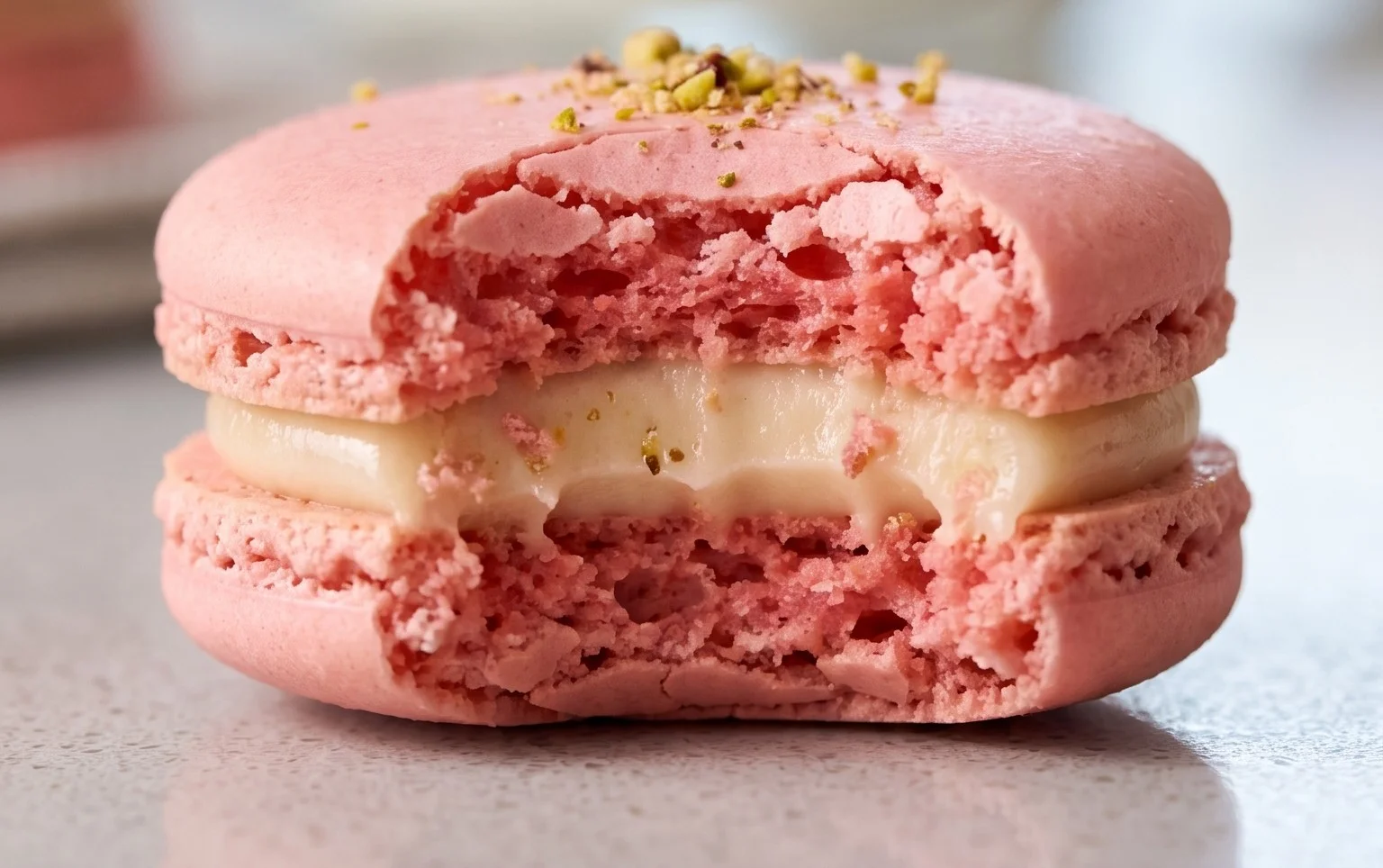
For the best flavor and texture, I highly recommend letting your filled macarons mature in the refrigerator for at least 24 hours. This allows the filling to soften the shells slightly, creating that perfect chewy interior and complementing the crisp exterior. Bring them to room temperature for about 20-30 minutes before serving. Enjoy your beautiful, homemade French macarons!
Conclusion:
Congratulations on embarking on your French macaron adventure! This recipe is truly wonderful because it demystifies the often-intimidating process, offering a clear path to creating those delicate, airy meringue shells with their signature chewy interior. The beauty of macarons lies in their versatility, making them perfect for any occasion. Imagin extracte them adorning a dessert table at a wedding, adding a touch of elegance to a birthday celebration, or simply being a delightful afternoon treat with a cup of coffee. Don’t be afraid to experiment with flavors; classic chocolate ganache and vibrant raspberry jam are just the begin extractning. Consider lavender-honey, pistachio-rose, or even a salted caramel. The possibilities are truly endless, allowing you to personalize your French macaron creations to your heart’s content. I wholeheartedly encourage you to give this recipe a try. With a little patience and practice, you’ll be rewarded with stunning, delicious macarons that will impress everyone, including yourself!
Frequently Asked Questions:
Why are my French macarons hollow?
Hollow macarons are often a result of over-beating the egg whites, improper macaronage (folding the dry ingredients into the meringue), or baking at too high a temperature. Ensure your meringue is stiff but not dry, and gently fold until a “lava-like” consistency is achieved. Baking time and oven temperature are also crucial; a slightly lower temperature for a longer duration can help.
My macaron feet are not forming, what am I doing wrong?
Lack of developing “feet” can be attributed to a few factors. This typically occurs if the meringue isn’t stiff enough, if the batter is overmixed, or if the macarons aren’t allowed to rest and form a skin before baking. A proper resting period is essential for the characteristic ruffled feet to appear.
French Macaron Recipe
A classic French macaron recipe with a delicate meringue shell and a smooth buttercream filling. Perfect for any occasion.
Ingredients
-
150 grams sifted super-fine almond flour
-
180 grams powdered sugar
-
1/4 teaspoon salt
-
120 grams large egg whites (at room temperature)
-
60 grams granulated sugar
-
4 drops liquid-gel food coloring
-
1 teaspoon pure vanilla extract
-
Vanilla Buttercream Frosting (for filling)
Instructions
-
Step 1
Sift together almond flour, powdered sugar, and salt into a medium bowl. Whisk to combine and set aside. -
Step 2
In a clean, dry bowl, whip egg whites on medium speed until foamy. Gradually add granulated sugar, one tablespoon at a time, and continue whipping on high speed until stiff, glossy peaks form. -
Step 3
Gently fold the food coloring and vanilla extract into the meringue. Be careful not to overmix. -
Step 4
Add about one-third of the dry ingredients to the meringue and fold gently until just combined. Repeat with the remaining dry ingredients in two more additions, folding until the batter reaches a “lava-like” consistency where it flows slowly from the spatula in a ribbon. -
Step 5
Transfer the batter to a piping bag fitted with a round tip. Pipe small circles onto baking sheets lined with parchment paper or silicone mats, leaving about 1 inch between each macaron. -
Step 6
Tap the baking sheets firmly on the counter several times to release any air bubbles. Let the macarons sit at room temperature for 30-60 minutes, or until a skin forms on the surface. -
Step 7
Preheat oven to 300°F (150°C). Bake for 12-15 minutes, or until the macarons have developed “feet” and are firm to the touch. -
Step 8
Let the macarons cool completely on the baking sheets before gently peeling them off. Fill each macaron with vanilla buttercream frosting or your choice of filling.
Important Information
Nutrition Facts (Per Serving)
It is important to consider this information as approximate and not to use it as definitive health advice.
Allergy Information
Please check ingredients for potential allergens and consult a health professional if in doubt.